


, Most businesses I’ve spoken to think their supply chain is “fine.” Stock moves. Orders go out. Customers mostly get what they need. Fine.
But fine isn’t good enough anymore. And here’s the thing most supply chain problems don’t announce themselves. They build quietly. A few late shipments. A stockout here and there. A truck off the road for three days. Nothing catastrophic. Just… friction. Constant, expensive friction.
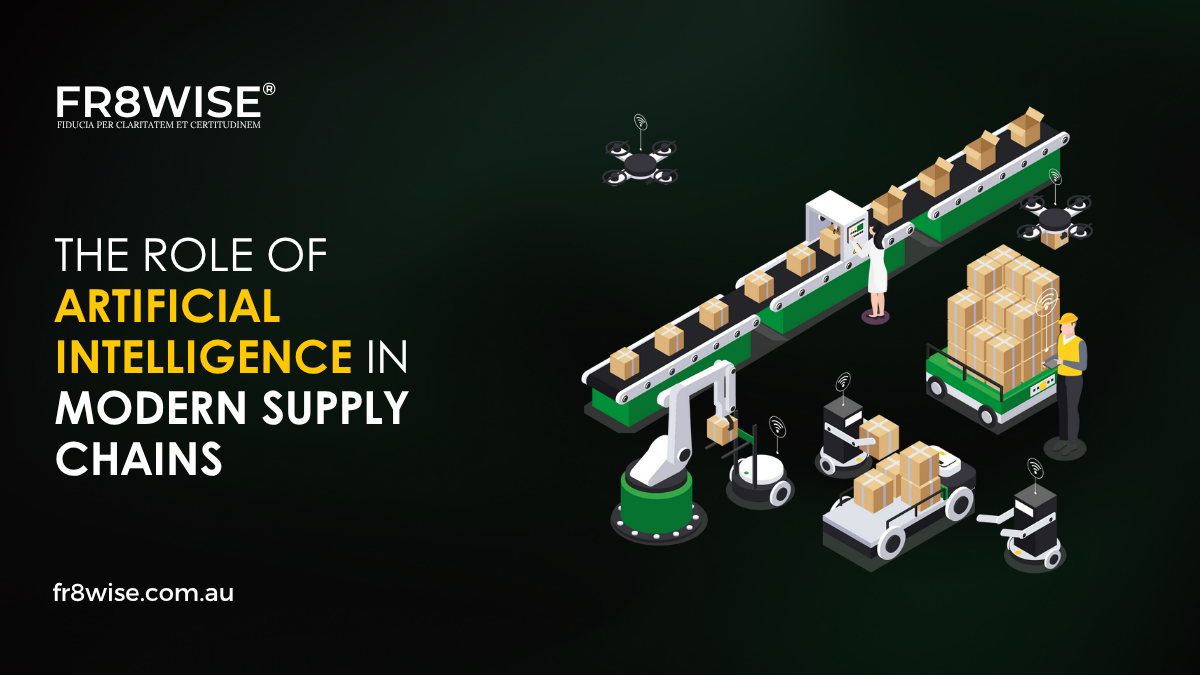
That’s what I want to talk about today. The role of artificial intelligence in supply chain management is doing something about this — not in theory, but in practice, right now, in businesses across Australia.
The Honest Problem With How Supply Chains Work Today
Picture a purchasing manager on a Monday morning.
She’s got last year’s sales figures open in Excel. She’s looking at the seasonal pattern from 2023adds a buffer maybe fifteen percent, maybe twenty because she’s been burned before. She places the order. It waits eight weeks for it to arrive from a supplier in Vietnam. And she hopes.
That’s not a bad system. For 1995, it was actually quite good.
But it’s 2025. Consumer behaviour shifts in days now. A single viral moment online can empty your shelves before your supplier even gets your next purchase order. A port strike in a country you’ve never visited can delay your shipment by five weeks. A competing brand runs a flash sale and suddenly your demand forecast is completely wrong.
The spreadsheet doesn’t know any of that. It only looks back. It has no idea what’s coming.
AI looks forward. That’s the fundamental difference and it’s a bigger deal than most people realise.
Demand Forecasting And Why Getting It Wrong Costs More Than You Think
I’ll give you a simple example of what bad forecasting actually costs.
Say you’re a retailer. You overorder by twelve percent across your top fifty SKUs. That’s inventory sitting in your warehouse for an extra six to eight weeks. You’re paying to store it. Your cash is tied up. Some of it might even go unsold and get marked down.
Now flip it. You underorder by twelve percent. You run out of stock on three of your best sellers during a peak period. Customers go elsewhere. Some of them don’t come back. That’s not just lost revenue that’s lost customers. Permanently.
AI-powered demand forecasting attacks this problem from every angle at once. It doesn’t just look at your historical sales. It pulls in weather data, economic indicators, what’s trending on social media, what your competitors are doing, and dozens of other signals, finds patterns in that data that no human analyst would ever spot manually.
The result? Forecasts that are meaningfully more accurate than what most businesses are working with right now.
For Australian businesses especially where you might be waiting ten or twelve weeks for stock from overseas suppliers getting the forecast right before you place the order isn’t just nice to have. It’s the difference between a smooth quarter and a very stressful one.
Getting Freight From A to B (And Why It’s Harder Than It Sounds)
Australia is enormous. I know that seems obvious but the logistics implications are genuinely underappreciated by a lot of businesses.
Moving freight from a warehouse in Melbourne to a customer in regional Western Australia isn’t like shipping across Europe. There are fewer roads. Less competition on certain routes. Fuel costs that compound dramatically over long distances. And if something goes wrong a breakdown, a road closure, a driver running out of legal hours you’re often in the middle of nowhere with very limited options.
AI route optimisation doesn’t just pick the shortest path on a map. Businesses searching for freight solutions Australia know that real efficiency comes from live data, weather systems developing across the country, fuel prices at different stops, vehicle capacity, and driver hours. It calculates the most efficient route given every constraint that exists right now not the constraints that existed when the route was originally planned.
And it keeps working while the truck is moving. Road closed due to flooding? Reroute. Weather event developing ahead? Flag it. Delivery window changed by the customer? Adjust the whole schedule.
I’ve seen businesses cut meaningful percentages off their freight costs just from this one application. Not because they were doing anything wrong before just because AI can process information faster and at a scale that human planning simply can’t match.
Breakdowns. The One That Happens At The Worst Possible Time.
Every logistics manager has a story. The truck that broke down on a remote highway at two in the morning. The forklift that died on the busiest day of the month. The refrigerated unit that failed halfway through a delivery run.
These aren’t just inconvenient. They’re expensive. And they’re almost always preventable.
Predictive maintenance using AI works like this. Sensors go on your vehicles and equipment. They collect data constantly vibration levels, temperature, engine performance, fuel consumption, tyre pressure. The AI reads all of that in real time and builds a picture of what “normal” looks like for each asset.
When something starts drifting away from normal even slightly, even in a way that wouldn’t show up on any standard check the system raises an alert. Not after the breakdown. Before.
Your team books the vehicle in for maintenance on a quiet Tuesday. They find a bearing that’s starting to wear. They replace it. Cost? Maybe a few hundred dollars and a couple of hours off the road.
Alternative? The bearing fails completely on a Thursday morning, three hundred kilometres from the depot, with a full load on board. Cost? Towing. Emergency repair. Delayed deliveries. Unhappy customers. And a driver who had a very bad day.
The maths here are pretty straightforward.
Knowing What’s Actually Happening In Real Time
Here’s a question worth sitting with.
Right now, do you know where every shipment in your supply chain is? Not approximately. Actually.
Most businesses don’t. And it’s not for lack of caring it’s because the information is scattered. Freight forwarder has one system. Your carrier has another. Warehouse management software is a third. Nobody has the full picture in one place, updated in real time.
So problems become visible late. A customs delay that happened on Monday shows up as a stockout on Friday. A carrier that’s been running behind schedule for three days finally triggers a complaint from a customer who’s been waiting. By then, your options are limited and expensive.
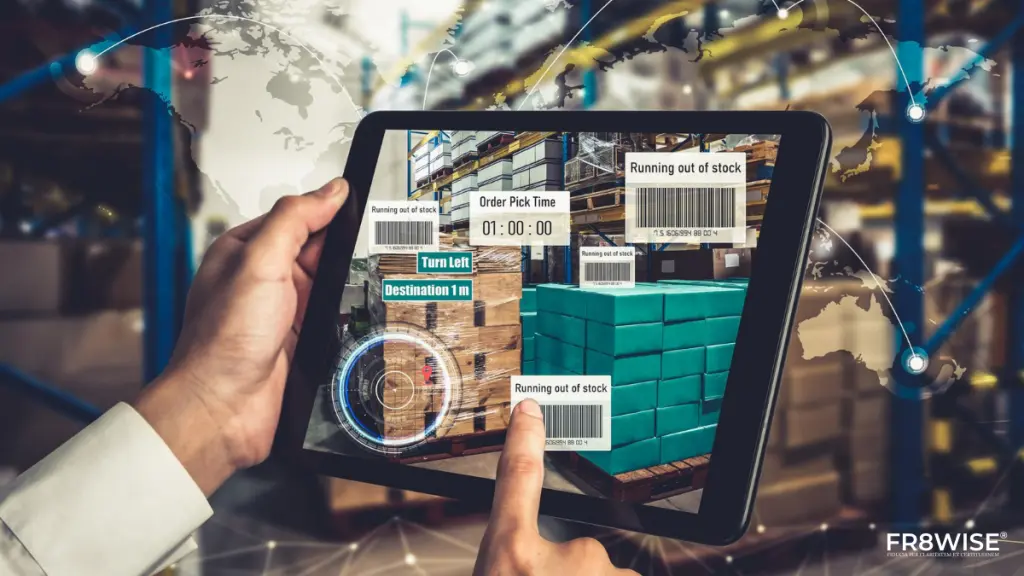
AI visibility platforms pull all of that information into a single dashboard. Live updates from every point in the supply chain. You see the delay on Mondaynot Friday. You can make a call, reroute stock, contact the customer proactively, make a decision while you still have choices.
That’s not a small thing. That’s a completely different way of managing a supply chain.
Risks You Didn’t See Coming (And How to See Them Coming Anyway)
Supply chains get disrupted. That’s just reality.
The question isn’t whether disruption will happen. It’s whether you’ll be ready when it does.
AI risk monitoring works by scanning a huge range of signals continuously. Financial health data on your key suppliers. Weather systems developing near major ports. Political developments in sourcing regions. Shipping lane congestion. News about regulatory changes in countries you import from.
When patterns emerge that suggest risk a supplier looking financially shaky, a port approaching capacity limits, a storm tracking toward a major freight hub the system surfaces it. Days or weeks before it becomes a crisis.
That lead time matters. With enough notice, you can place an early order before a shortage hits. You can qualify a backup supplier before your primary one fails. You can reroute freight before a port becomes unusable.
Businesses that handle disruption well aren’t lucky. They prepared. AI makes that kind of preparation practical because no human team can monitor all of those signals manually, all the time, across a global supply chain.
On Sustainability Because It Matters Now
Customers are asking about this more than they used to. Investors require it. Regulators are moving in this direction. And greenwashing making environmental claims you can’t support with data is becoming a real reputational and legal risk.
AI helps on both fronts.
It actually reduces environmental impact. Optimised routes burn less fuel per delivery. Accurate forecasting reduces overproduction and waste. Smarter warehouse systems use energy more efficiently. These are genuine reductions not commitments made in a sustainability report and then quietly forgotten.
And it tracks everything. Fuel consumption. Emissions per delivery route. Waste levels. Energy use across facilities. That data is accurate, auditable, and available when you need it for reporting.
For businesses navigating ESG requirements or responding to customer questions about their environmental footprint, that combination of real reduction and real data is genuinely valuable.
What FR8WISE Actually Does With All Of This
At FR8WISE, we work with businesses in Australia and internationally to build supply chains that hold up under pressure.
We use AI-enabled tools across forecasting, route planning, visibility, and risk management. But the tools are only part of it. What matters is how they’re applied and that requires understanding your specific business, your specific supply chain, and the specific challenges you’re dealing with.
We’ve worked with retailers managing complex seasonal inventory. Manufacturers coordinating procurement across multiple continents. Importers navigating customs compliance across different regulatory environments. And businesses that have simply decided that the way things have been working isn’t good enough anymore.
If that last one sounds familiar, we should talk.
Get in touch with the FR8WISE team.
Questions People Actually Ask Us
Does AI work for businesses that aren’t huge corporations?
Yes — and this is probably the most common misconception. You don’t need to be running a global supply chain to benefit. Even mid-sized businesses see real results from AI forecasting and route optimisation. The tools have become much more accessible in the last few years.
How long before you see results?
Depends on what you’re implementing. Route optimisation can show measurable cost reductions within weeks. Demand forecasting accuracy improves over months as the system learns your patterns. Risk management is harder to quantify but the businesses that have it notice most when something goes wrong and they were already prepared for it.
Is this relevant for Australian logistics specifically?
Very much so. Long distances, remote delivery areas, heavy dependence on international supply chains, and growing sustainability pressure AI addresses all of these directly. Australian businesses probably have more to gain from AI logistics tools than businesses in more densely connected markets.
What about the environmental side can AI actually reduce emissions?
Yes, in real and measurable ways. Route optimisation alone can cut fuel consumption significantly. When you combine that with less overproduction from better forecasting, the environmental impact adds up. And unlike manual estimates, AI-generated emissions data is accurate enough to use in formal reporting.
What is predictive maintenance, exactly?
It’s using sensor data and AI to detect warning signs of equipment failure before anything actually breaks. Instead of reacting to a breakdown, you schedule a repair at a convenient time with the right parts already on hand. For Australian logistics, where a breakdown in a remote area can cascade into a very expensive problem, it’s one of the highest-value applications of AI available right now.