


Shipping goods internationally sounds simple until you’re three weeks in, your container is sitting at port, and someone’s asking for a document you’ve never seen before.
Most Australian business owners hit this wall eventually.
Read this before that happens. We’ve covered how freight forwarding Australia, what the process looks like step by step, and how to pick the right partner without getting burned.
So, What Is Freight Forwarding?
A freight forwarder gets your goods from one country to another.
They’re not the ones driving the truck or loading the ship. Their job is everything else locking in transport bookings, sorting the paperwork, pushing through customs, keeping tabs on where your cargo is. Picture them as the person running the whole operation behind the scenes.
Geography makes this non-negotiable for Australian businesses. No land borders. No road connections to other countries. Every import and export moves by sea or air full stop.
The numbers back this up. Australia ships over $400 billion in goods abroad each year. Each one of those shipments needs someone managing the logistics end to end.
 How Does Freight Forwarding Actually Work?
Here’s what happens from the moment you hand over your cargo to the moment it reaches its destination.
First — your forwarder assesses the cargo. What is it? How heavy? Any hazardous materials? Perishable? Temperature-sensitive? The answers shape everything else.
Then they plan the route. Sea, air, road, rail or some combination. The best route depends on your timeline, your budget, and the nature of the goods. A forwarder with good carrier relationships will get you options you wouldn’t find on your own.
Then comes the paperwork. Most people underestimate this part. Commercial invoices, packing lists, bills of lading, certificates of origin, import permits and that’s before you factor in product-specific requirements. Miss one thing and your shipment stops. Your forwarder prepares all of it and checks it before anything moves, because a single wrong HS code is enough to cause a delay that costs you thousands.
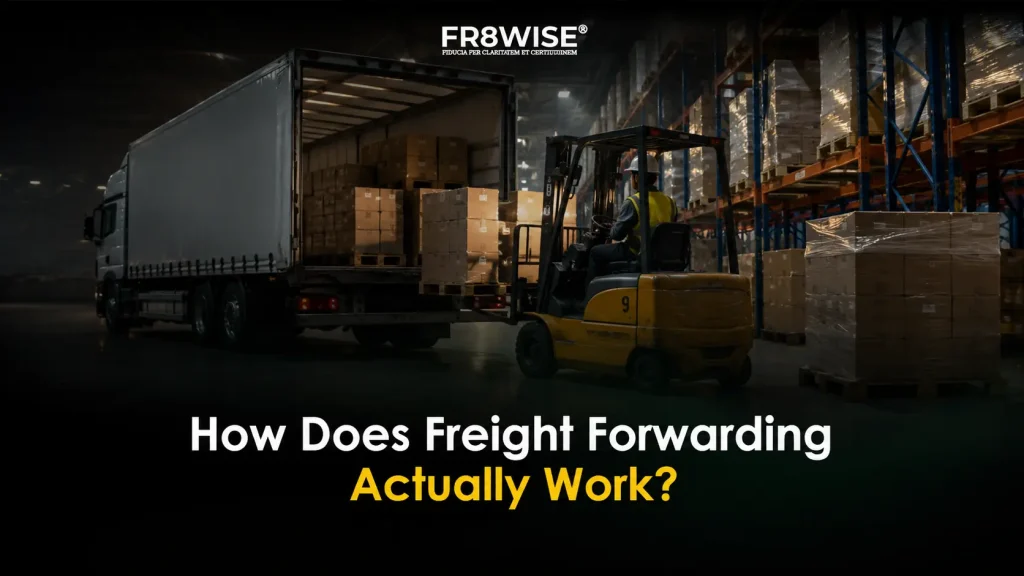
Once everything’s in order, the goods move. Space gets booked, pickup gets arranged. For LCL shipments, your forwarder groups your cargo with others heading the same way which keeps your costs down without you having to fill a whole container.
While it’s in transit, they track it. If something goes wrong port delays, weather, customs holds a good forwarder deals with it before you even know there’s a problem.
On arrival, they clear customs and arrange delivery. The job isn’t done until your goods reach the right address.
Sea, Air, or Road? Understanding Your Options
Not every shipment is the same. Here’s a quick breakdown of what’s available to Australian businesses.
Sea Freight
For anything bulky or heavy, sea freight is usually the answer. Sydney’s Port Botany, Port of Melbourne, Port of Brisbane, Fremantle these are busy ports moving thousands of containers a week.
Two options here:
FCL (Full Container Load) One container, just your goods. You pay for the whole box whether it’s full or not. Worth it for high volumes quicker, safer, less handling.
LCL (Less than Container Load) Your cargo shares a container with someone else’s. You pay for the cubic metres you use. Costs less upfront, though it adds a day or two to the timeline.
Air Freight
Fast. Expensive. Use it when timing matters more than cost urgent restocks, high-value goods, perishables. Sydney and Melbourne handle the bulk of Australia’s air cargo.
Road and Rail
Once goods land at port, they still need to reach a warehouse or customer. Rail from Brisbane to Sydney, road from Melbourne to regional Victoria — these domestic legs matter. Your forwarder should be managing the whole chain, not just the international piece.
Multimodal
Sea into Sydney, rail to Melbourne, road to the end customer. Many shipments work this way. Pulling it all together without gaps needs a forwarder who has both domestic and international covered.
Why Not Just Do It Yourself?
Fair question. Some businesses try.
Here’s what they usually find.
Freight rates are not fixed. Carriers charge based on volume, relationships, and contract terms. A freight forwarder moves cargo for dozens or hundreds of clients. That volume gives them negotiating power you simply don’t have as a single business. You’ll almost always pay more going direct.
Customs is complicated. The Australian Border Force does not accept “I didn’t know.” Incorrect documentation leads to delays. Misclassified goods lead to fines. Some mistakes lead to cargo being seized. A forwarder with proper compliance experience knows what’s required and stays current when the rules change.
It takes time. Managing even one international shipment can eat up your week. Managing multiple shipments, across multiple countries, with different documentation requirements? That becomes a full-time role. Most businesses find it far more cost-effective to outsource this to specialists.
And when things go wrong — because at some point they will a freight forwarder has options. They have backup carriers, alternative routes, contacts at ports, and the experience to resolve problems fast.
Australian Customs: The Part Nobody Warns You About
Let’s talk about customs. Because this is where Australian importers and exporters run into the most trouble.
Every shipment entering Australia goes through the Australian Border Force. Customs duty hits most imported goods, and GST adds another 10% on top of the customs value. What you actually pay depends on how your product is classified and where it was made.
Free Trade Agreements can save you money. Australia has FTAs running with China, the US, Japan, South Korea, ASEAN, and others. Importing from any of those countries? You might qualify for a lower duty rate sometimes zero. But the savings only happen if you apply for them correctly. A forwarder who knows this will handle it. One who doesn’t will cost you.
Biosecurity is serious. Australia has some of the toughest biosecurity rules in the world. Agricultural products, timber, packaging materials — all of it gets scrutinised. If your goods don’t meet the requirements, they can be treated, detained, or sent back at your cost.
Export controls exist too. Certain products particularly those with dual-use potential require export permits. Your forwarder should flag this before the shipment, not after.
Working with a specialist like FR8WISE means you have someone watching this for you. It’s not just logistics. It’s risk management.
What to Look for in a Freight Forwarder
Australia has no shortage of freight forwarding options. But they are not all the same. Here’s what actually separates a good freight forwarder from an average one.
Industry knowledge. Moving mining machinery is nothing like shipping fashion garments. A forwarder who’s done it before already knows the permits, the handling specs, the compliance traps. Ask whether they’ve worked in your sector before. It makes a real difference.
Carrier relationships. Rate and space access come from how well-connected your forwarder is. Long-term carrier relationships mean better pricing and priority when capacity gets tight. Ask who they use and how long those relationships go back.
Compliance capability. Customs expertise should be in-house. When something needs to be resolved quickly, waiting on a third party costs time and money.
Communication. The best forwarders reach out before you need to chase them. Problems get flagged early, not after they’ve turned into delays. If a forwarder goes quiet when things get complicated, find another one.
Visibility. Live tracking, clear invoicing, performance data you should be able to see exactly what’s happening with your shipment at any point.
For businesses that want a deeper level of strategic input not just someone to move boxes, but a partner who will help you think about your whole supply chain it’s also worth looking at what Think Global Logistics (TGL) brings to the table in terms of consulting and strategic logistics planning.
The Challenges Australian Businesses Actually Face
Let’s be honest about the hard parts.
Port congestion. Melbourne and Botany have both had bad stretches. Containers sitting for days, schedules blown out. Businesses that plan early and give themselves buffer time fare better. Your forwarder should know which ports are running hot and adjust accordingly.
Capacity crunches. Global demand picks up and suddenly space is gone. Rates spike. Businesses with solid, ongoing forwarder relationships get looked after. Newcomers going to the market cold during a crunch pay for it.
Documentation errors. Wrong paperwork is the single most common reason shipments get held up at customs. It’s rarely carelessness the requirements are genuinely complicated. A good forwarder catches errors before they become a problem.
Currency exposure. Freight invoices come in USD. A weaker Australian dollar means higher costs in AUD even when the carrier hasn’t changed their rate. Worth building this into your budget rather than being surprised by it later.
Supply chain disruptions. COVID showed everyone how fragile single-source supply chains can be. Businesses with backup suppliers, alternative routes, and forwarders who could move fast came through it better.
 What’s Changing in Australian Freight Forwarding
The industry is not standing still.
Technology is changing everything. Route optimisation, automated docs, live tracking, predictive delay alerts forwarders using these tools catch problems earlier and move faster when things go sideways. Their clients notice the difference.
Sustainability is becoming a requirement. Boards, customers, and regulators are all asking about emissions now. Sea freight is far cleaner per tonne than air. A growing number of carriers can now back that up with verified carbon-neutral options. Picking a forwarder that takes this seriously matters more than it did five years ago.
E-commerce is changing the volumes. Australian online retail has grown dramatically. That growth has created new logistics demands faster fulfilment, better returns processes, cross-border shipping at scale. Freight forwarders that have adapted to e-commerce requirements are in high demand.
Nearshoring is gaining ground. Many Australian businesses that relied heavily on single-country supply chains — particularly from China are now diversifying. That creates more complexity in logistics, but also more resilience.
How FR8WISE Helps Australian Businesses
FR8WISE is a Sydney-based supply chain and logistics consultancy. The team works with businesses across 14 industries construction, manufacturing, automotive, agriculture, fashion, e-commerce, and more.
What’s different about FR8WISE is the approach. Most freight companies focus on moving cargo. FR8WISE focuses on the strategy behind it. Before recommending anything, the team looks at how your business actually works your trade routes, your growth plans, your risk exposure and builds a logistics strategy around that.
Services include smart procurement strategies, customs compliance analysis, and a Mastery in Supply Chain and Logistics programme for businesses that want to build real internal capability.
If you’re an Australian business ready to stop reacting to logistics problems and start getting ahead of them, FR8WISE is worth a conversation.
Freight Forwarding Australia FAQs
What does a freight forwarder do in Australia?
Handles your international shipment end to end transport bookings, customs paperwork, tracking, and delivery coordination.
How much does freight forwarding cost in Australia?
Depends on cargo size, weight, route, and what services you need. Get a quote based on your actual shipment. On top of the freight rate, budget for documentation, customs clearance, port charges, and insurance.
How long does sea freight from China to Australia take?
Usually 12 to 22 days. Varies based on which port it leaves from, which port it arrives at, and the carrier routing.
What is LCL freight?
Less than Container Load. Your cargo shares a container with other businesses’ goods. You pay for the space you use not the whole box. Works well for smaller or irregular shipments.
Do I need cargo insurance?
Yes. Carrier liability covers very little. If your goods have real value, insure them.
What is an Incoterm?
A standard trade term that sets out who pays for what freight, insurance, duties — and who carries the risk at each point in the journey. FOB, CIF, and DDP are the common ones. Pick the wrong one and you may end up covering costs you weren’t expecting.
Can a freight forwarder handle dangerous goods?
Some can, some can’t. If your cargo is classified hazardous, check that your forwarder is certified for DG and knows the IATA rules for air or IMDG rules for sea.