


Guide prepared by FR8WISE, a Sydney-based supply chain and logistics consultancy working with e-commerce businesses across Australia.
You’ve built the store. The products are good. Orders are coming in. Then reality hits. You’re packing boxes at midnight. A courier loses a parcel. A customer in Perth wants to know why their order from Sydney took nine days.
Nobody puts this part in the pitch deck.
Here’s what e-commerce logistics actually looks like in Australia the real challenges, the options on the table, and how to build something that doesn’t fall apart once order volume picks up.
What Is E-commerce Logistics?
s is everything that happens after someone clicks “buy” inventory, warehousing, picking and packing, shipping, delivery, and returns.
One order touches five or six systems at once. your inventory platform, your warehouse, your courier, your customer notifications, your returns process. Get one piece wrong and the customer notices right away.
Australia makes this harder than most places. We’re a big country with a small population spread thin across huge distances. A buyer in regional WA is not getting the same delivery experience as someone in inner-city Melbourne. Your setup needs to account for that.
Why E-commerce Logistics in Australia Is Different
Long distances and a population spread across a few coastal cities make Australian delivery slower and pricier than most comparable markets.
Sellers in the UK can reach most of their customers within a day or two by road. That’s not how Australia works.
Distance is the big one. Sydney to Perth is about 3,900 kilometres. That’s further than London to Moscow. Warehouse on the east coast, customer in WA you’re looking at multi-day transit unless you’ve planned for it.
The population sits in a few coastal pockets. Sydney, Melbourne, Brisbane, Perth, Adelaide. Step outside those cities and delivery slows down. It gets pricier fast too. Remote and regional surcharges are standard across Australian carriers. Some remote postcodes can run double the standard metro rate, according to shipping cost guides published by major courier comparison platforms.
Freight is expensive here. Fuel, driver shortages, sheer distance it all adds up. For most Australian e-commerce businesses, freight is one of the biggest line items in the budget, and it only gets harder to manage as order volume climbs.
Peak season hits differently. Click Frenzy, Black Friday, the Christmas rush all of it lands on a courier network that’s already stretched thin. Sellers who don’t plan ahead usually see their delivery promises blow out. Customers remember that.
None of this makes Australian e-commerce logistics impossible. It just means you need an actual strategy, not something cobbled together in the early days and never touched again.
The Core Pieces of E-commerce Logistics
Five things make up e-commerce logistics: inventory, warehousing, fulfilment, shipping and delivery, and returns. Each one feeds into the next. Weaken one and the customer feels it.
Inventory Management
Know what stock you have, where it sits, and how fast it’s moving. Get this wrong and you’re either overselling stock you don’t actually have, or sitting on dead inventory that’s tying up cash you need elsewhere.
Real-time visibility across every sales channel is non-negotiable once you’re selling on more than one platform. Site, Amazon, eBay stock counts need to update everywhere the second something sells. Spreadsheets fall apart fast once you’re running more than one channel.
Warehousing and Storage
Wherever your products sit before they ship. A spare room works fine when you’re starting out. It stops working the moment you’re processing more than a handful of orders a day.
At that point, most businesses either set up their own dedicated warehouse space or hand storage, picking, and packing over to a third-party logistics (3PL) provider.
Order Fulfilment
Picking the right item, packing it properly, getting it ready to go. Speed matters more than ever customers expect same-day or next-day dispatch now, and slow fulfilment is a top reason for bad reviews and cart abandonment complaints.
Shipping and Delivery
Getting the parcel from your warehouse to the customer’s door. Choosing the right couriers, negotiating rates, managing delivery promises, and handling the inevitable mess — lost parcels, failed drop-offs, wrong addresses.
Returns Management
Online retail sees far higher return rates than physical stores, especially in fashion. A clunky returns process pushes customers away from buying again. A smooth one builds loyalty. This is usually the most neglected part of the whole system and one of the highest-value fixes.
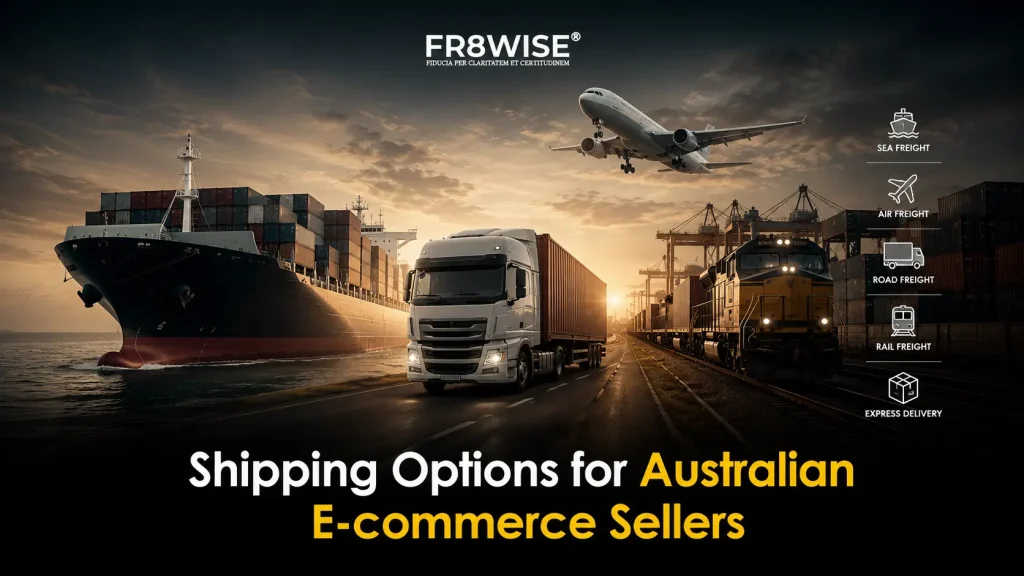
Shipping Options for Australian E-commerce Sellers
Australian sellers usually pick between Australia Post, private couriers, express delivery, dedicated freight, or a mix of all four depending on parcel size, budget, and speed.
There’s no single best option here. It depends on your product, your order volume, and what your customers expect.
Australia Post
Still the go-to for small to mid-sized sellers, especially parcels under 5kg. Solid network, broad regional coverage, decent pricing on lighter items. Slower than most private couriers for metro-to-metro runs.
Private Couriers
Sendle, Couriers Please, Aramex, TNT all competitive on rate, especially at higher volumes. Most plug straight into Shopify and WooCommerce, so labels and tracking happen automatically.
Same-Day and Express Delivery
CouriersPlease Express, Sendle’s faster tiers built for the growing demand for fast delivery, mostly in metro areas. Comes at a premium. Usually only worth it for higher-margin products or sellers competing directly on speed.
Freight for Bulky or Heavy Items
Furniture, appliances, oversized goods — none of this moves through standard parcel networks. You need dedicated freight arrangements here, and this is exactly where a logistics partner stops being optional.
Multi-Carrier Strategy
Most growing sellers don’t stick to one courier. Australia Post for regional, a private courier for metro express, freight forwarding for bulky items. Juggling that mix well usually takes either dedicated logistics staff or a partner who coordinates it for you.
Quick Comparison: Shipping Options at a Glance
| Option | Best For | Speed | Cost |
| Australia Post | Small parcels under 5kg, regional coverage | Moderate | Low to moderate |
| Private Couriers | Higher-volume sellers, platform integration | Fast | Moderate |
| Same-Day/Express | Metro orders, high-margin products | Fastest | High |
| Freight (Bulky Items) | Furniture, appliances, oversized goods | Slow to moderate | Varies by weight/distance |
| Multi-Carrier Mix | Scaling businesses with varied order types | Varies | Optimised overall |
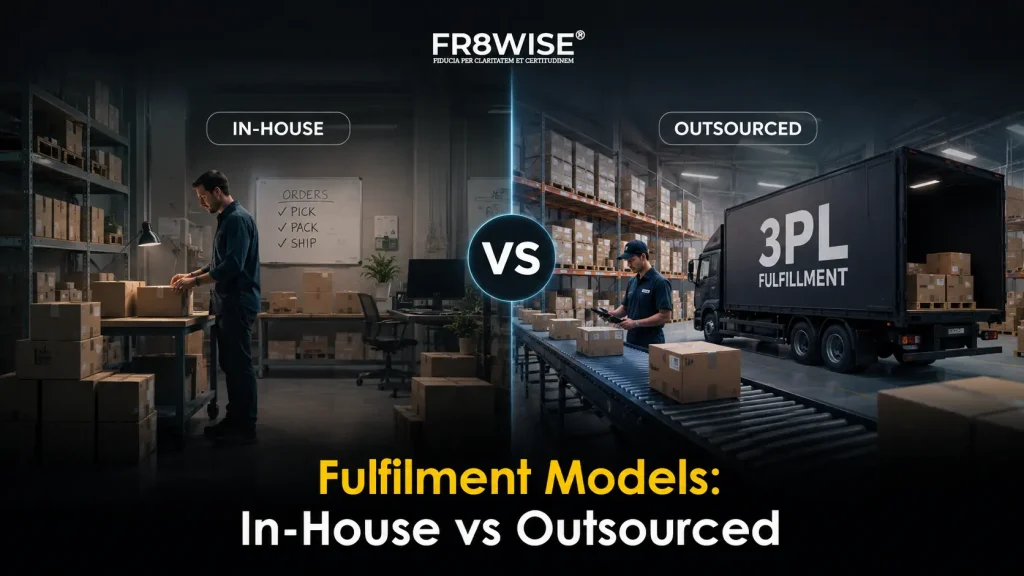
Fulfilment Models: In-House vs Outsourced
E-commerce businesses choose between in-house fulfilment, a 3PL, a hybrid of the two, or dropshipping each trading off control for scale differently.
This is one of the biggest calls an e-commerce business makes, and it shapes almost everything downstream.
In-House Fulfilment
You handle storage, picking, packing, and shipping yourself. Full control packaging, branding, quality checks, all in your hands.
Fine at low volumes. It turns into a real burden once you’re processing dozens or hundreds of orders a day. Staffing, warehouse space, process all of it needs to scale with your sales. Most founders are surprised how quickly this turns into a full-time job on its own.
Third-Party Logistics (3PL)
A 3PL stores your stock and handles picking, packing, and shipping on your behalf. You send the inventory, they fulfil the orders. Frees up serious time, and often cuts shipping costs too, since 3PLs usually negotiate better courier rates through volume.
The trade-off is control. You’re relying on someone else’s process and accuracy. Pick a 3PL with solid systems, clear communication, and a real track record in your product category.
Hybrid Models
Some businesses keep their fast-moving, high-margin products in-house for quality control, and push bulk or slower inventory to a 3PL. Best of both, if you can manage the coordination.
Dropshipping
Products ship straight from a supplier to the customer you never touch the stock. Low overhead, but you give up control over speed, packaging, and quality. Works for some models. Becomes a real problem once customers start expecting fast, branded delivery.
Quick Comparison: In-House vs 3PL Fulfilment
| Model | Pros | Cons | Best For |
| In-House | Full control, custom packaging, direct quality checks | Time-intensive, scales poorly, needs warehouse space | Low order volume, brand-focused sellers |
| 3PL | Frees up time, often lower shipping costs, scales easily | Less direct control, relies on third-party accuracy | Growing businesses, higher order volumes |
| Hybrid | Balances control and scale | Needs more coordination | Sellers with mixed product lines |
| Dropshipping | Low overhead, no inventory risk | Limited control over speed and quality | Test products, low-capital launches |
Technology That Powers Modern E-commerce Logistics
The core tools are inventory management, order management, shipping software, warehouse management, customer notifications, and returns platforms.
The businesses that scale without breaking are almost always running the right tech stack underneath.
Inventory management systems keep stock levels synced across every channel in real time. No overselling, clear visibility on what needs reordering.
Order management systems (OMS) pull every order regardless of which platform it came from into one workflow. Far more efficient than juggling separate platforms by hand.
Shipping software like ShipStation, Starshipit, or Shippit automates labels, compares courier rates, and pushes tracking updates. Saves serious manual time once order volume picks up.
Warehouse management systems (WMS) optimise how stock gets stored and picked particularly useful once you’re managing more inventory or more than one storage location.
Customer notification tools keep buyers in the loop automatically confirmed, dispatched, out for delivery, delivered. This one feature alone cuts down “where’s my order” tickets dramatically.
Returns management platforms handle the process for both sides auto-generated return labels, tracked reasons for return, data fed straight back into inventory and quality control. A clunky manual returns process is one of the fastest ways to lose a customer for good, even if the original sale went perfectly.
Analytics dashboards pull delivery performance, courier reliability, and cost-per-order into one view. Without this, most businesses are guessing at which parts of their logistics are actually working.
You don’t need all of this on day one. Most businesses add tools as volume justifies the spend. Bolting on every system before you actually need it just adds complexity without adding value. Solve the current pain point first, then build out.
Common E-commerce Logistics Mistakes in Australia
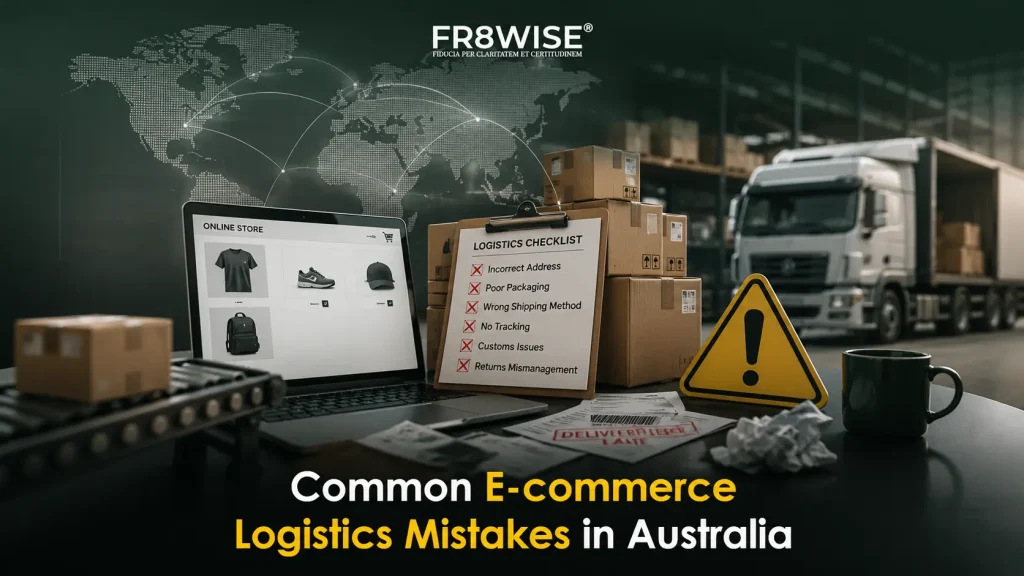
The biggest mistakes: underestimating regional costs, skipping peak season planning, neglecting returns, relying on one courier, and flying blind on inventory.
These show up over and over with growing online businesses.
Underestimating regional delivery costs. A flat rate that works for metro orders often loses money on regional and rural ones. Know your real cost-to-serve by location before you set shipping prices.
No buffer for peak season. Black Friday and Christmas spikes catch unprepared sellers every single year. Courier networks get congested, dispatch slows, complaints pile up. Planning stock and fulfilment capacity months ahead makes the difference.
Ignoring returns until they’re a problem. A simple, clear returns process should exist from day one not get bolted on after customers start complaining.
Relying on one courier. Every courier has a bad week eventually. If that’s your only option, every single order takes the hit.
Treating logistics as a back-office afterthought. Delivery speed and reliability are competitive factors now. Customers compare delivery promises before they even compare price.
No real-time inventory visibility. Overselling stock you don’t have wrecks trust fast and it’s completely avoidable with the right systems.
A logistics partner who knows the Australian market helps you sidestep most of these before they cost you customers.
Peak Season Logistics: Surviving Black Friday and Christmas
Surviving peak season means planning courier capacity early, stocking buffers, setting honest delivery promises, and staffing for fulfilment, not just sales.
Peak season is where logistics setups either hold up or fall apart in public, right in front of customers, at the worst possible time.
Volumes spike hard, fast. During the 2025 Black Friday and Cyber Monday period, Australia Post processed more than 5.8 million parcels in a single day. That was its busiest delivery day on record. Parcel volumes rose 6.3% year-on-year. Every courier in the country feels this surge at the same time. That means even your most reliable partner can slow down when the whole network is under strain. (Source: Australia Post, via CEP-Research and MHD Supply Chain, 2025.)
Start planning months out, not weeks. Lock in extra capacity with your couriers early. Most courier companies prioritise sellers who flagged volume in advance over those who show up with a surprise surge in late November.
Build stock buffers on your best sellers. A stockout during peak season costs you twice the lost sale, and the marketing spend that drove the traffic to a sold-out page.
Set realistic delivery promises and say so clearly. A proactive “delivery may take a bit longer during peak periods” message does far less damage than a delivery date that quietly slips.
Staff up fulfilment, not just sales. Plenty of businesses plan marketing spend for a sales spike and forget to plan the warehouse labour needed to actually pack and dispatch that volume on time.
Businesses that treat peak season as a logistics problem, not just a marketing one, consistently come out the other side with better customer retention.
International Shipping and Sourcing for Australian E-commerce
Selling or sourcing internationally adds freight forwarding, customs clearance, import duties, export paperwork, and currency risk to your logistics plan.
Plenty of Australian e-commerce businesses don’t stop at domestic. They source overseas, sell overseas, or both and that adds a layer worth planning for properly.
Sourcing from overseas suppliers means international freight, customs clearance, and import duties before your product even lands in an Australian warehouse. If you’re sourcing from China, the US, or elsewhere, you need a freight forwarding partner. They should understand both the international leg and the local customs requirements. Get this wrong and you’re looking at unexpected costs or delays right when you need stock the most.
Selling to international customers from Australia brings its own headaches export paperwork, international courier rates, destination-country customs, and delivery windows that need to be set clearly with the customer up front.
Currency exposure is real too. Paying suppliers in USD while selling in AUD means exchange rate swings hit your margins directly. Build this into your pricing rather than absorbing it as a surprise every quarter.
For businesses with any international component, working with a partner who has genuine freight forwarding and customs expertise or a global logistics consulting firm like TGL makes a measurable difference to both cost and reliability.
Building a Logistics Strategy That Scales
A logistics strategy that scales starts with a clear delivery promise, mapped cost-to-serve, growth headroom, multiple carriers, and regular performance reviews.
A setup that worked fine at ten orders a week will not survive five hundred.
Start with your customer promise. Decide what delivery experience you’re actually offering next-day metro, 3-5 day standard, free shipping over a threshold and build the logistics around hitting that consistently. A promise you can’t keep does more damage than no promise at all.
Map your cost-to-serve. Know exactly what it costs to fulfil and ship to each region you sell into. This should shape your pricing and shipping fees, not get discovered after the fact.
Plan for growth before you need it. If your current setup is already maxed out, you’re already behind. Build headroom into warehouse space, 3PL capacity, or courier relationships before volume forces a rushed decision.
Diversify your shipping partners. One courier is a single point of failure. A mix gives you flexibility on cost, speed, and resilience when something inevitably goes wrong.
Review performance regularly. Delivery times, damage rates, return rates, complaints this data shows you exactly where things are breaking. Most businesses only look at it after a problem has already cost them customers.
This is where a logistics partner with real Australian market experience earns their keep not just running the day-to-day, but helping you build something that holds up as the business grows.
How FR8WISE Supports E-commerce Businesses in Australia
FR8WISE works with online businesses across Australia to build logistics that can actually handle growth, not just survive it.
Instead of a one-size-fits-all shipping solution, the team looks at your product, your customer base, your order volumes, and your growth plans first. Then they recommend a strategy. Sometimes that means optimising your current courier mix. Sometimes it’s helping you move to a 3PL model, or building a smarter inventory and procurement system that cuts stockouts and overstock at the same time.
FR8WISE also brings real depth in customs and import logistics valuable for sellers sourcing from overseas, where getting freight forwarding and customs clearance wrong quietly eats into margins that should be hitting the bottom line.
If your current logistics setup has outgrown itself, FR8WISE is worth a conversation.
Frequently Asked Questions
What is the difference between fulfilment and logistics in e-commerce?
Logistics is the whole system — inventory, warehousing, shipping, returns. Fulfilment is one piece of that: picking, packing, and getting an order ready for dispatch.
How much does e-commerce shipping cost in Australia?
Depends on weight, dimensions, and destination. Metro is generally cheaper than regional or rural. Most sellers see costs ranging from a few dollars for small light items up to $20 or more for heavier or regional parcels.
Should a small e-commerce business use a 3PL?
Depends on volume and growth stage. Low-volume sellers often manage fine in-house. Once order volume eats up too much time, or shipping costs start cutting into margins, a 3PL usually pays for itself.
What is same-day delivery and is it worth offering?
The order ships and arrives the same day it’s placed, usually only available in metro areas. A premium service best suited to higher-margin products or sellers competing on speed.
How can I reduce shipping costs for my online store?
Negotiate better courier rates through volume. Use multiple carriers and compare per-order. Optimise packaging to avoid dimensional weight charges. Work with a logistics partner who already has carrier relationships in place.
What’s the biggest logistics challenge for Australian e-commerce sellers?
Distance and regional coverage. Reaching customers outside the major metro areas, reliably and affordably, is consistently the hardest part of running e-commerce logistics here.
Do I need a different logistics strategy if I sell on multiple platforms?
Yes, to some degree. Selling on your own site, Amazon, and eBay at once means your inventory and order systems need to sync across all of them in real time. Without that, you risk overselling stock that’s already been allocated elsewhere. A centralised order management system becomes essential once you’re past one or two channels.
How do I know when it’s time to switch from in-house fulfilment to a 3PL?
There’s no fixed order volume that triggers this. It comes down to your margins, your team’s capacity, and how much time fulfilment is pulling away from growing the business. A common sign: packing and shipping starts eating into hours that should go toward marketing, product, or customer service. If a 3PL works out cheaper per order than your current in-house cost, that’s usually your answer.
FR8WISE Strategic Supply Chain & Logistics Solutions | Sydney, Australia