


Written by the FR8WISE Supply Chain Team | FR8WISE is a Sydney-based logistics and supply chain consultancy. Our team works directly with Australian businesses across 14 industries to improve warehousing, procurement, and freight operations.
Most businesses ignore warehouse management until something breaks.
A stockout during peak season. An order that went to the wrong address. Inventory numbers that don’t match what’s sitting on the shelf.
By then, customers are already annoyed. And fixing the mess costs more than preventing it would have.
This guide covers warehouse management Australia, what it actually involves, what tools help, and what the businesses that get it right are doing differently.
What Is Warehouse Management?
Warehouse management is the control and optimization of everything inside a storage facility receiving stock, storing it correctly, picking and packing orders, and dispatching them accurately and on time.
It’s not just shelves and forklifts. It’s the system that decides where products live, how pickers find them, how inventory stays accurate, and how orders leave the building without errors.
Get it right and costs go down, errors drop, and fulfillment speeds up. Get it wrong and the problems quietly pile up in write-offs, wasted labour hours, and customer complaints that could have been avoided.
Why Warehouse Management Matters in Australia
Australian warehousing is harder than most markets. High labour costs, long delivery distances, and rising customer expectations all put pressure on how warehouses run.
Labour isn’t cheap here. Every slow pick, every unnecessary walk across the warehouse floor, every manual process that should be automated all of it adds cost. And in Australia, warehouse labour is one of the biggest expenses in any fulfilment operation.
Distance makes everything harder too. Sydney to Perth is close to 4,000 kilometres. An order that leaves a warehouse late, or goes out with an error, doesn’t just inconvenience the customer. It creates a multi-day problem that’s expensive and slow to fix.
Then there’s accuracy. B2B buyers, online shoppers, retail customers all expect the right item, on time, undamaged. A warehouse that can’t deliver that consistently loses business. Not gradually. Fast.
We’ve seen this directly with clients who came to us after growing faster than their warehouse operations could handle. The business was doing well. The warehouse was the bottleneck. That gap is surprisingly common in Australian businesses that scale quickly.
The Core Functions of Warehouse Management
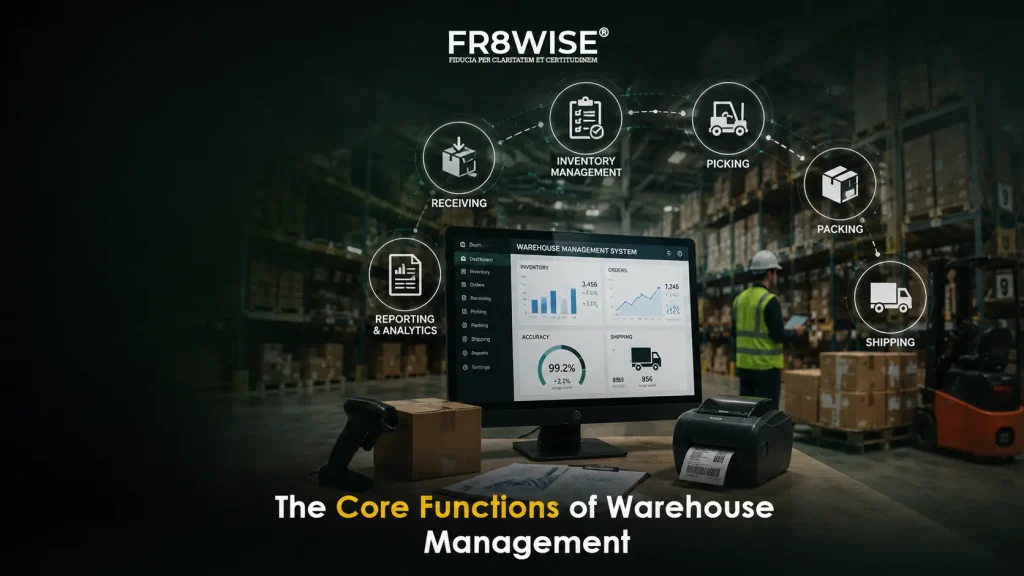
Warehouse management has five core functions: receiving, storage, inventory control, order fulfilment, and despatch. Each one feeds the next. A weakness in any of them shows up downstream.
Receiving
Goods arrive. They get checked against purchase orders, inspected, counted, and logged.
Sounds simple. It’s not. Receiving errors don’t stay at receiving, they travel through the whole operation. A pallet that gets put away without being scanned becomes a phantom inventory problem weeks later. We’ve seen businesses spend hours searching for stock that was never correctly received in the first place.
Storage and Slotting
Where products live inside the warehouse, and why.
Fast-moving SKUs belong close to the packing bench. Heavy items go at ground level. Fragile goods need space away from traffic. A well-slotted warehouse cuts travel time per pick which cuts labour cost per order. A poorly slotted warehouse means pickers walk twice as far as they need to. That adds up fast.
Inventory Control
Knowing exactly what you have, where it is, and how much is available to sell.
Without accurate inventory, you’re guessing. You oversell stock you don’t have. Or you reorder stock you already have too much of. Both situations cost money. Inventory accuracy is the foundation everything else is built on.
Order Fulfilment
Picking the right item, in the right quantity, packing it properly, getting it ready to go.
Speed matters. Accuracy matters more. A single fulfillment error, wrong item, wrong quantity, wrong address costs you the reshipping fee plus the customer’s trust. In a market where online reviews spread quickly, that’s a real business risk.
Despatch
Orders out the door, into the right carrier, on time.
This is where warehouse management connects directly to the customer experience. A warehouse that despatches accurately and on schedule is the foundation of a reliable delivery promise. One that doesn’t create a chain of problems that are hard to undo once they reach the customer.
Types of Warehousing in Australia
Australian businesses typically choose between private warehousing, public warehousing, third-party logistics (3PL), and bonded warehousing. The right model depends on volume, flexibility, and how much you want to manage yourself.
Private Warehousing
You own or lease the space and run it yourself. Full control. Higher fixed costs rent, equipment, staff but cost-effective at high volumes where those fixed costs spread across a large number of orders.
Public Warehousing
Shared storage on a short-term or flexible basis. Lower commitment, useful for seasonal inventory or testing a new market. Per-unit costs can be higher at scale, but the flexibility is valuable when you’re not ready to commit to a fixed space.
Third-Party Logistics (3PL)
A 3PL stores your stock and handles picking, packing, and despatch on your behalf. You manage the inventory. They manage the operation.
A good 3PL brings systems, carrier relationships, and operational know-how that most businesses couldn’t build cost-effectively on their own. The trade-off is less direct control which is why choosing a 3PL with real experience in your product category matters enormously.
Bonded Warehousing
Goods stored under customs control before duties are paid. Useful for importers who need flexibility on where goods go next you don’t pay duty until the product moves into the domestic market. For businesses importing at scale, this can be a meaningful cash flow advantage.
Warehouse Management Systems (WMS): What They Do
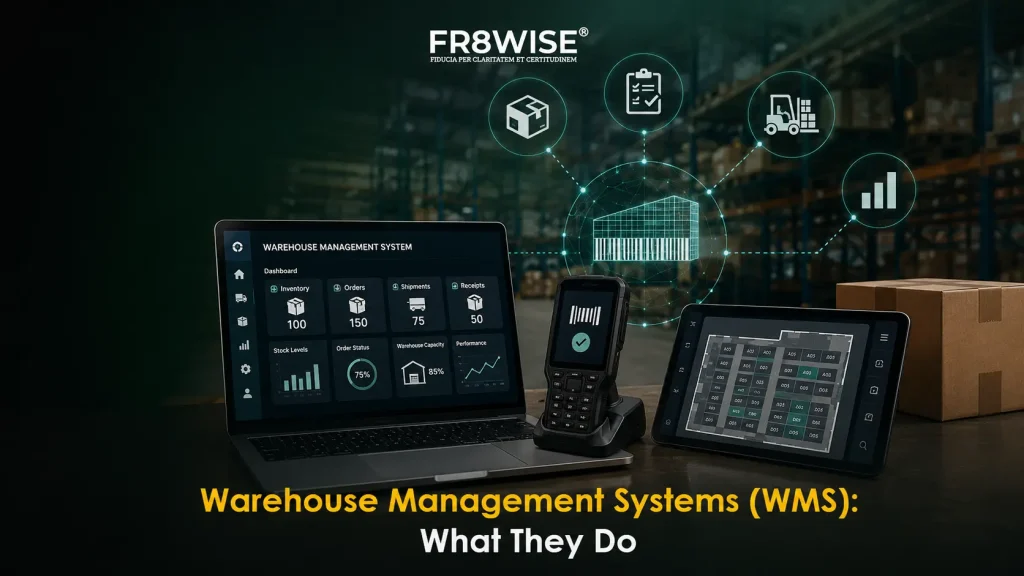
A Warehouse Management System (WMS) is software that tracks every movement of stock inside a warehouse in real time from receiving through to despatch.
Without one, most warehouses run on spreadsheets and memory. That works at low volumes. It breaks down fast as complexity increases.
Here’s what a WMS actually gives you:
Live inventory visibility. Stock counts update automatically as goods move. No manual counts between orders. No surprises when you go to pick something that the system says is there but isn’t.
Directed picking. The system tells pickers where to go and in what order. Pick paths get optimised. Travel time drops. Accuracy improves.
Receiving and putaway logic. Incoming stock gets assigned to the right location automatically, based on product type, velocity, and available space.
Labour tracking. See how long each task actually takes. Find the bottlenecks. Allocate staff better.
System integration. A WMS connects to your order management system, your ERP, your carrier platforms, and your sales channels. Everything stays in sync.
Performance reporting. Fill rates, order accuracy, cycle times, labour productivity all visible in one place.
One of our clients, a mid-sized Australian importer running roughly 300 orders a day, switched from a spreadsheet-based system to a WMS. Within three months, pick errors dropped by over 80% and dispatch time per order improved by around 25%. Those numbers aren’t unusual. Manual systems tend to mask how much time and money they’re actually losing.
Common Warehouse Management Problems in Australia
The most common warehouse problems we see in Australia are inaccurate inventory, poor storage layout, slow picking, over-reliance on manual processes, and poor peak season planning.
Inaccurate Inventory
Stock records that drift away from physical reality. It starts with a receiving error here, a misplaced pallet there. Over time the gap grows. The fix is a combination of better receiving discipline, regular cycle counts, and a WMS that updates automatically.
Poor Storage Layout
A warehouse that was laid out when the business was smaller and never updated. Fast-moving products at the back. Heavy items on high shelves. No logic to how products are grouped. Pickers spend more time walking than picking. This is one of the most fixable problems in warehouse management, and one of the most commonly ignored.
Slow Pick Speeds
Pickers walking long distances per order. No directed picking. No optimised slot allocation. The result is high labour cost per order. Even a 10% improvement in pick speed across 500 daily orders adds up to significant savings over a year.
Over-Reliance on Manual Processes
Paper-based receiving. Manual stocktakes. Spreadsheet despatch logs. These approaches work at very low volumes. They become liabilities slow, error-prone, and impossible to audit once order volume grows past a certain point.
Peak Season Planning
The warehouse that copes during a normal week often breaks during peak season. Insufficient storage space, understaffed picking teams, slow despatch processes all become critical problems when order volumes double. Planning for peak, not average, demand is the only way to get through it without falling behind.
How to Improve Warehouse Management
Better warehouse management comes from a proper audit, layout optimisation, cycle counting, scanning, the right WMS, and treating peak season as a logistics problem, not just a sales one.
Start With an Audit
Before changing anything, understand what’s actually happening. Map the current layout. Time pick speeds. Count inventory accuracy. Find where errors are happening and why. An audit gives you a baseline. It also surfaces problems that weren’t visible from the outside — which is almost always the case.
Fix the Layout First
Review where products are slotted based on how they actually move. Fastest-selling SKUs near the packing bench. Heavy items at ground level. Similar products grouped logically. This single change often delivers the fastest visible improvement, with no technology investment required.
Run Cycle Counts
Stop doing annual stocktakes. Start counting a section of inventory every day or every week, rotating through the whole warehouse over time. The result is inventory that stays accurate year-round rather than being corrected once and then drifting again.
Introduce Scanning
Even without a full WMS, barcode scanning at receiving and despatch removes a huge proportion of manual data entry errors. Every scan creates an automatic, accurate record. The investment is low. The improvement in accuracy is immediate.
Choose a WMS That Fits
Not every warehouse needs the same system. A business processing a few hundred orders a week needs something different from a distribution centre moving thousands of lines a day. When evaluating a WMS, focus on how it integrates with your existing platforms, how quickly staff can learn it, and whether it can grow with the business.
Plan Peak Season Early
Three months out, minimum. Confirm storage capacity. Pre-hire temporary staff. Lock in carrier arrangements. Make sure picking and packing processes can handle the volume before it arrives, not after it’s already overwhelming the team.
Warehouse Management and the Broader Supply Chain
A warehouse doesn’t operate in isolation. It sits between suppliers and customers, and how it performs affects both ends of the chain.
On the inbound side, slow or inaccurate receiving creates downstream problems. Stock that should be available to sell sits unprocessed. Replenishment cycles get disrupted. Purchase orders can’t be confirmed against actual receipts.
On the outbound side, a warehouse that despatches accurately and on time is the backbone of a good customer experience. Every order that goes out correctly is a customer who doesn’t need to contact support, doesn’t leave a negative review, and is more likely to order again.
For businesses importing from overseas China, the US, Southeast Asia the warehouse operation also connects directly to freight forwarding and customs clearance. Getting goods from port to warehouse efficiently requires coordination between the logistics provider, the customs broker, and the warehouse team. When those pieces don’t talk to each other, delays and errors compound.
For businesses that want strategic input across the full supply chain, not just warehousing Think Global Logistics (TGL) provides specialist consulting that covers the whole picture.
Key Warehouse KPIs to Track
The five most important warehouse metrics are inventory accuracy, order accuracy, pick rate, on-time despatch, and cost per order.
Inventory accuracy system count vs physical count. Target 99% or above. Below 95% is a serious problem that needs immediate attention.
Order accuracy orders dispatched without errors. Best-in-class operations run at 99.5% or higher. Below 98% means errors are happening multiple times a day at scale.
Pick rate lines or orders picked per hour, per picker. Track it. Benchmark against your own history. Improve it gradually through layout and process changes.
On-time despatch orders leaving the warehouse within the committed window. If this is low, find the bottleneck picking, packing, or carrier coordination.
Cost per order total warehouse operating cost divided by orders fulfilled. This number tells you whether efficiency improvements are actually reducing unit costs over time.
Track these consistently. Act on what they tell you. A warehouse that measures performance improves. One that doesn’t tend to run the same way it always has until a problem forces change.
How FR8WISE Supports Warehouse Management in Australia
The FR8WISE supply chain team works with Australian businesses to build warehouse operations that are accurate, efficient, and built to scale.
What makes this different from a standard logistics review is the scope. Warehouse problems rarely exist in isolation; a receiving issue usually has an upstream cause in procurement or freight. A despatch problem often connects to how orders flow from the sales channel into the warehouse system. Looking at one piece in isolation misses the root cause.
FR8WISE covers the whole chain warehousing, inventory management, freight forwarding, and customs compliance which means recommendations fix the actual problem rather than patching the symptom.
Whether you’re setting up a new operation, struggling with accuracy, preparing for growth, or moving from manual processes to a WMS, the FR8WISE team can help you get there.
Frequently Asked Questions: Warehouse Management Australia
What is warehouse management in simple terms?
It’s the system that controls everything inside a storage facility receiving goods, storing them in the right place, picking and packing orders accurately, and getting them out the door on time.
What does a Warehouse Management System (WMS) do?
A WMS tracks every movement of stock in real time. It directs receiving, putaway, picking, and despatch. It connects to your other business systems and keeps inventory accurate automatically.
How do I improve inventory accuracy?
Introduce barcode scanning at receiving and despatch. Run regular cycle counts instead of annual stocktakes. Use a WMS that updates stock records automatically as goods move.
When does a business need a WMS?
Most businesses find manual processes breaking down somewhere between 100 and 500 orders a day, depending on product complexity. If inventory errors or pick mistakes are becoming regular, a WMS is usually overdue.
What is the difference between a 3PL and running your own warehouse?
A 3PL manages storage and fulfilment on your behalf. Your own warehouse gives you more control but more operational responsibility. The right choice depends on volume, growth stage, and how much complexity you want to manage directly.
How does warehouse management connect to freight forwarding?
For importers, goods move from port directly into the warehouse. Delays or errors in freight forwarding and customs clearance flow straight into warehouse operations. A well-run supply chain has these pieces coordinated not operating as separate silos.
What are the most important warehouse KPIs?
Inventory accuracy, order accuracy, pick rate, on-time despatch, and cost per order. These five metrics give a clear picture of where the operation is performing and where it needs work.